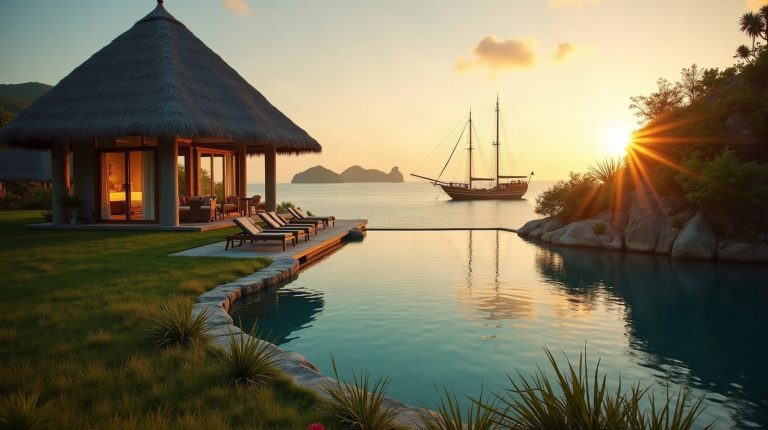
How to Choose the Perfect Sumba Private Island Resort for Your Travel Style
How to Choose a Sumba Private Island Resort for Your Travel Style
When guests ask me how to choose a Sumba private island resort, I always start with one thing: clarity. Not photos, not rates, not “best of” lists. Clarity on how you actually want to live for those few precious days on Sumba’s wild edge of Indonesia.
Are you waking with the swell report, or with your baby monitor? Do you want horses in the savannah at golden hour, or total seclusion on a sandbar with no footprints but yours? Once that picture is sharp, the right private island or ultra‑luxury resort on Sumba almost selects itself.
Here is the exact framework I use when helping ultra‑luxury travellers, surfers, honeymooners, and multi‑gen families choose between exclusive private islands off Sumba and high‑end coastal estates around Tambolaka, Nihiwatu, Weekuri, and Tarimbang.
1. Start with Style: How Private Is “Private” for You?
Not all “private islands” around Sumba operate the same way. Some are full buy‑outs only; others offer a few villas with shared facilities. Before you compare websites, decide how far you want to retreat from the world.
- Full private‑island buy‑out
Ideal for HNW families, weddings, or a small group of friends who want every villa, boat, and staff member dedicated to them. Think 10–30 guests, exclusive use of the island, customized menus, and the ability to set your own daily rhythm without compromise. - Ultra‑luxury coastal resort with island‑like privacy
Properties along the Nihiwatu coast or near Tarimbang often feel as secluded as a private island but still offer a few other guests around the bar or yoga deck. This suits couples and surfers who like privacy but also appreciate a subtle social buzz and broader activity program. - Hybrid: private villa + boat access to offshore islets
A private villa on Sumba’s main island (for example an exclusive villa at Sumba Private Island Resort) with daily boat access to sandbars and tiny offshore islands can give you the best of both worlds: rock‑solid infrastructure on land, yet days that feel totally castaway.
If your priority is absolute control of the environment — music volume, kids’ dinner times, wedding fireworks — a full buy‑out style resort is almost always the cleanest solution.
2. Match the Location to Your Passions: Surf, Savannah, or Lagoon?
Sumba is large — around 11,000 km² — and its landscapes shift dramatically from west to east. Location shapes your stay more than most guests realize.
- Tambolaka area (West Sumba)
Your gateway if you fly from Bali to Tambolaka Airport. Resorts reachable within 60–90 minutes by car or boat work well for families with young children or short stays. You still get the wide savannah feel plus access to beaches and traditional villages. - Nihiwatu coast (Southwest Sumba)
Famous for powerful left‑hand waves and long, wild beaches. If surf is your non‑negotiable, staying on or near this coastline shortens your “paddle‑time‑to‑pillow‑time” dramatically. The trade‑off: slightly longer transfers by 4×4 from Tambolaka. - Weekuri Lagoon and surrounds
Weekuri is a saltwater lagoon with luminous blue water, accessible as a day trip from several west‑coast resorts. It is ideal for non‑surfers, kids, and photo‑driven travellers. Being within 90–120 minutes of Weekuri keeps your excursion days relaxed and realistic. - Tarimbang Bay (Southeast Sumba)
A magnet for surfers and photographers. Tarimbang’s bay picks up consistent swell (especially June–September) and still feels wild. This side of the island involves a longer overland drive from Tambolaka, so it suits guests staying 5+ nights who value surf quality and raw landscape over quick access.
When you evaluate a Sumba private island resort, ask for exact transfer times from Tambolaka and travel time to key areas you care about: surf breaks, Weekuri, traditional villages like Ratenggaro, or wild horse spots on the savannah. “Near” on a map can mean very different things on Sumba’s roads.
3. Villa Layout and Design: How Do You Actually Live on Holiday?
Pictures are seductive, but floor plans are honest. Before choosing a Sumba private island resort, look at how the villas are arranged and how privacy is handled.
- For honeymooners
Ask for stand‑alone villas set well apart, with no direct line of sight from neighboring decks or paths. Outdoor showers, private pools, and ocean‑facing beds matter more than square meter count. Late breakfast in‑villa and turndown touches become part of the experience. - For HNW families
You want flexible combinations: a master villa plus 2–4 connected or adjacent bedrooms for children and nannies. Enclosed living rooms, shaded pools, and secure stairways are key if you’re traveling with toddlers or grandparents. - For surf‑focused groups
Think gear‑friendly: board storage, outdoor rinse areas, shaded terraces for watching the swell, strong Wi‑Fi for forecasting apps, and quick barefoot access to the beach or boat jetty.
At Sumba Private Island Resort, for example, we design villa groupings so a three‑generation family can effectively “take over” a pocket of the island with its own pool, staff team, and service schedule. That kind of micro‑planning is what separates a pleasant stay from a frictionless one.
4. Surf, Sea, and Safari: Be Honest About Your Activity Priorities
Sumba can be a pure switch‑off destination, or one of the most active islands in Indonesia. When you ask how to choose a Sumba private island resort, your activity priorities are the biggest filter.
- Surfing
Sumba picks up swell from March to November, with peak consistency June–September. If you are a regular or goofy‑footer chasing world‑class waves, you’ll want:- Direct access to reef breaks or fast boat access (under 20 minutes)
- Guides who understand tides, crowd management, and safety
- Clear rules on guest numbers per break or per session
- Non‑motorised ocean days
Stand‑up paddling, snorkelling, line‑fishing, and sandbar picnics are where a private island shines. Ask exactly what gear is included, how many hours of boat time per day are part of your package, and how the team plans around wind and swell. - Savannah and cultural experiences
Sumba’s grasslands and megalithic villages are globally rare. Read up on the island first via Wikipedia’s Sumba page or official sources like Indonesia.travel, then ask the resort:- Which villages they work with, and how they support local communities
- Whether guides are Sumbanese and can translate conversations, not just facts
- How many guests typically join each excursion — small groups preserve authenticity
- Spa, yoga, and wellness
If your priority is deep rest, ask for:- Number of treatment rooms vs. number of guests
- Possibility of in‑villa massages
- Shaded yoga decks with wind protection and sunset/sunrise orientation
A quick litmus test: look at the daily sample schedule the resort proposes. If it excites you as‑is, you are probably aligned. If you mentally delete half of it, or wish for a dozen extra surf slots, keep searching.
5. All‑Inclusive vs. À la Carte: What Actually Delivers Value?
Ultra‑luxury travellers aren’t usually chasing low numbers; they’re chasing clarity and fairness. On a remote island like Sumba, that often means some version of all‑inclusive. The trick is understanding what “all‑inclusive” really covers.
When you evaluate options, ask specific questions:
- Food and beverage – Are all meals included? Any supplements for certain dishes or private dinners on sandbars? What about premium wines and spirits?
- Activities – Is daily boat use included up to a set number of hours? Do surf guiding, spearfishing, or horseback experiences carry extras? What about off‑island excursions to Weekuri or Tarimbang?
- Children’s inclusions – Are kids’ meals, babysitting hours, and junior activities part of the package, or billed separately?
- Service ratios – High staff‑to‑guest ratios (1:1 or better) are common at the ultra‑luxury level. It’s useful to know this, not as a bragging point, but to understand how responsive your experience can be when you want to change plans three times in a day.
On our side at Sumba Private Island Resort, I design packages so that a family or couple can arrive, ignore prices for the entire stay, and leave with one final bill that matches what they expected. If a resort cannot give you that level of clarity before you book, you may end up negotiating small charges instead of enjoying the island.
6. Logistics: How to Reach Sumba from Bali via Tambolaka (2026 Planning)
A fair question I hear constantly: “How difficult is it to reach a private island off Sumba?” In practice, it’s straightforward with good coordination, but there are moving parts you should understand as you plan for 2026.
- Step 1: International to Bali (Denpasar – DPS)
Most guests arrive via Bali, then continue domestically. Build at least a 3‑hour buffer between your international arrival and your Bali–Sumba flight (or stay a night in Bali) to absorb any airline delays. - Step 2: Bali to Tambolaka (TMC)
Several domestic carriers usually operate Bali–Tambolaka flights, with typical flight times around 1 hour 10 minutes. Schedules can change seasonally, so plan around your resort’s advice for 2026 rather than data from previous years. - Step 3: Tambolaka to your resort
- Coastal or savannah resorts (west/southwest): typically 45–120 minutes by vehicle, sometimes followed by a short boat ride.
- Private islands off Sumba: expect 30–90 minutes by car to the nearest harbour, plus 15–45 minutes by private boat, depending on weather and sea conditions.
- Luggage and surfboards
Domestic airlines in Indonesia usually allow 20–23 kg checked luggage as a base; surfboards and oversized gear may require extra fees. Coordinate dimensions in advance so both the airline and resort boats can handle your quiver safely. - Helicopter options
For time‑sensitive guests, helicopter transfers are sometimes available on a charter basis. These are weather‑dependent and need early coordination, but they can reduce a half‑day surface journey to under an hour.
The easiest path is to let your chosen resort or an expert guide coordinate flights, VIP airport handling, and ground/sea transfers as one integrated journey. By 2026, demand for Sumba is likely to increase further, so locking in domestic seats early will matter.
7. Weddings, Groups, and Buy‑Outs: Reading the Fine Print
If you are planning a wedding, milestone birthday, or corporate retreat on a Sumba private island, start conversations 12–18 months ahead. The main constraint is not always availability; it’s alignment on how you want to use the island.
- Exclusivity – Will you have a full buy‑out, or will there be other guests on the island? Some couples are comfortable with a semi‑private model; others want total control of sound, photography, and timelines.
- Event infrastructure – Check capacity for seated dinners, backup indoor or tented spaces in case of wind or rain, and power load (bands, lighting, firework permissions).
- Local marriage requirements – Legal weddings in Indonesia require specific documentation and religious or civil elements. Many couples choose to sign paperwork at home and hold a symbolic ceremony on Sumba. Ask your resort which approach they support best.
- Children and elder accessibility – If you’re bringing multi‑generational groups, you’ll want shallow‑entry pools, handrails on pathways, and buggy access across the island.
At Sumba Private Island Resort, we often build wedding weekends as a three‑day “arc”: arrival and welcome on day one, ceremony and main celebration on day two, and a relaxed recovery day with optional excursions on day three. Designing your venue choice around that arc makes the whole stay feel coherent instead of like a single event stretched awkwardly over several days.
If you’d like tailored advice on how to choose a Sumba private island resort for your honeymoon, surf trip, family gathering, or 2026 wedding, my team and I are happy to share specific itineraries and example budgets for different styles of travel. Contact us via WhatsApp at +62 811-9994-1919 or email [email protected] and we’ll help you match the right corner of Sumba to the way you most want to live.